
Harlow bin collection dates checked at 40 addresses: rubbish and recycling alternate, flats get rubbish emptied weekly, and garden waste costs £57 a year.
Harlow Council does move bin days for bank holidays, and it does not say so on any of its bins pages. The notice sits on the self-service portal instead, where you have to be looking for it.
That notice, checked on 30 August 2026, reads: “Collections days will be revised due to the Late Summer bank holiday from Monday 31 August. Normal collections days will resume on Monday 7 September 2026.”
We checked a real Harlow address against the council’s own collection lookup to see what “revised” means in practice. A property whose normal day is Friday is listed for Saturday 5 September, then back to Friday on 11 September. The whole week slides one day later, and the Friday rounds end up working the Saturday.
This page covers the three bins Harlow uses, what the garden waste subscription costs this year, the bulky waste price ladder, how long you have to report a missed collection, and the rules at the tip on Temple Bank. Everything below was checked against the council’s own pages on 30 August 2026.
The three bins, and how often each is emptied
Harlow runs a weekly food collection with recycling and general waste alternating either side of it. The council’s putting your bins out page sets out the pattern: “One week we collect non-recycling, the next week will be recycling. We collect food waste every week.”
| Container | What goes in | How often |
|---|---|---|
| Recycling wheelie bin or blue box | Paper, card, aerosols, foil, cans, plastic bottles and pots, cartons, mixed glass | Every 2 weeks |
| Black non-recycling wheelie bin, or purple sacks | Anything not recyclable, plus nappies and polystyrene | Every 2 weeks, alternating with recycling |
| Outdoor food caddy, plus a kitchen caddy indoors | All food, including meat, bones, bread and plate scrapings | Every week, all year |
| Brown garden waste bin or compostable bags | Grass, hedge cuttings, leaves, weeds, small branches | Every 2 weeks, paid subscription only |
Three things catch people out.
- Extra recycling is collected. Extra rubbish is not. The council will take additional recycling in clear or white bags left next to a full bin. It will not take anything outside the black bin, and the lid has to shut. Households without a wheelie bin get purple sacks, up to three a fortnight.
- Not every property has a wheelie bin. Harlow issues blue boxes for recycling and purple sacks for rubbish where a bin will not work, which is common in the town’s terraces and flat blocks.
- Black plastic still cannot be recycled, and neither can polystyrene, wallpaper, crockery or plastic film. The full accept and reject lists are on the council’s recycling bin and non-recycling bin pages.
What Harlow does take that many Essex councils do not is a wider range of plastics. From 1 April 2026 the council added yoghurt pots, soup pots, spread and ice cream tubs, biscuit tubs, meat and fruit trays, ready meal trays and TetraPak cartons to the kerbside list. No extra bin was issued for them, they go in with the rest.
Never put batteries, vapes or gas canisters in any bin. The council has run a warning after a bin lorry fire, and there is a free battery collection instead, covered below.
Flats are being brought into the food waste service. The council’s food bin page says that from April 2026 food waste is collected weekly from flat blocks, with a kitchen caddy per household and a communal bin in the bin store.
Finding your collection day
The council’s lookup is on its self-service portal at selfserve.harlow.gov.uk. Enter a postcode or street name, pick the address, and it returns the next several collections by container and date. It is also where the bank holiday notice appears, which is the only place the council publishes one.
Harlow bin collection dates this autumn: what 40 addresses show
The council publishes no printed calendar, so we read the collection lookup for 40 Harlow addresses on 17 September 2026, houses and flats, covering every weekday round. It returned dates up to the end of October, and three patterns came out of it.
There is no single “recycling week” for the whole town. Two Thursday houses make the point. In Malkin Drive the recycling bin goes out on Thursday 17 September, and the black bin on 24 September. In Silvesters it is the other way round. The same split turned up on the Monday rounds, so a neighbour’s bins in another street are not a safe guide to yours.
For a house on a fortnightly cycle, the pattern the lookup gave from mid-September was:
| Your round | Recycling | Black bin |
|---|---|---|
| Week A (for example Malkin Drive, Thursday) | 17 Sep, 1 Oct, 15 Oct, 29 Oct | 24 Sep, 8 Oct, 22 Oct |
| Week B (for example Silvesters, Thursday) | 24 Sep, 8 Oct, 22 Oct | 17 Sep, 1 Oct, 15 Oct, 29 Oct |
The food caddy is emptied every week on the same day, on both cycles.
Flats work differently: the rubbish goes every week, on a different day. At every communal block we checked, the communal food bin is emptied weekly and the communal recycling bin fortnightly on one day, and the communal non-recycling bin is emptied weekly on the following working day. Sovereign Court and Gibson Court in Bishopsfield have food and recycling on a Tuesday and rubbish on a Wednesday; Soper Square and Allis Mews have food and recycling on a Friday and rubbish on the Monday. Spring Hills Tower gets its communal rubbish emptied twice a week, on Tuesday and Friday.
Garden waste goes out in your black bin week, and not always on the same day. Every subscriber in the sample had the brown bin collected in the week the black bin goes, not the recycling week. At most addresses it was the same weekday; in Whieldon Grange the rest of the bins go on a Thursday and the garden waste on the Friday.
Your own dates are on the council’s collection lookup. The council’s crews and contractor, Veolia, carry out about 4.5 million collections a year and the council reported a 99.9% on-time rate in its June 2025 update.
Two changes this autumn: bin checks and free caddy liners
Bins with gas canisters or vapes in them will not be emptied. On 31 July 2026 the council said that hazardous items had caused several fires in collection lorries and at recycling plants, and that Veolia would carry out extra bin checks. Any bin found to contain them is left unemptied.
Houses with a wheelie bin get a free roll of food caddy liners from September 2026. The council’s food bin page says the “Power Up” campaign, run with Love Essex, sends each household with a wheeled rubbish bin a one-off roll of compostable liners, a leaflet and a reminder sticker for the rubbish bin. If you regularly fill your caddy, you can request a second one on the self-service portal, and a surplus can go out in a cardboard box on top of the caddy.
Bank holidays and Christmas
Collections shift. For the August 2026 bank holiday the council’s portal says normal days resume on Monday 7 September, and the address we checked moves from Friday 4 September to Saturday 5 September.
Christmas is different again. The council’s Christmas and new year information page set out last winter’s arrangements, and the same three rules have held for several years:
- Garden waste stops for a fortnight. There were no green waste subscription collections between 22 December 2025 and 5 January 2026.
- One extra bag of rubbish is taken, on your first non-recycling collection after Christmas. Extra recycling goes out as normal, and extra food waste can go in a cardboard box on top of the caddy.
- Real Christmas trees are collected in January. Subscribers put the tree next to the brown bin or bags on their January collection day. Everyone else has to book a tree collection.
The 2026 festive dates have not been published yet. Check the portal in December rather than assuming last year’s pattern repeats.
Garden waste: £57, and £37.80 more if you are new
The garden waste service is a paid subscription and it is not cheap to start.
The green waste page gives the price for 1 April 2026 to 31 March 2027 as £57 a year. New customers pay an extra £37.80 to cover the bin or the bags, so a first year costs £94.80. Existing subscribers pay the £57 only.
Sign up part way through the year and the subscription is charged pro rata, but the £37.80 supply charge is not. Joining in August, for example, costs £38 plus £37.80, a total of £75.80. Cancel and then change your mind and there is an £11.55 rejoining fee.
Two practical rules the council states plainly and people still fall foul of:
- The crews will not empty a bin without a valid permit sticker. Subscribers with a wheelie bin get one in the post and have to fix it where the instructions on the reverse say.
- If your property is on bags rather than a bin, you get four compostable bags per collection and no more. Put out five and the fifth is left, and you have run a bag down for nothing.
There is a second, pay as you go option. A roll of 20 compostable bags costs £25.20, bought by calling 01279 446655 and collected in person from the Civic Centre, after which you book a collection date online. The council no longer takes your own bags or the old pre-paid brown bags.
The subscription runs all year apart from the Christmas fortnight, and a real Christmas tree can go out next to the bin in January at no extra cost.
Bulky waste: from £35.50, and upholstery costs extra
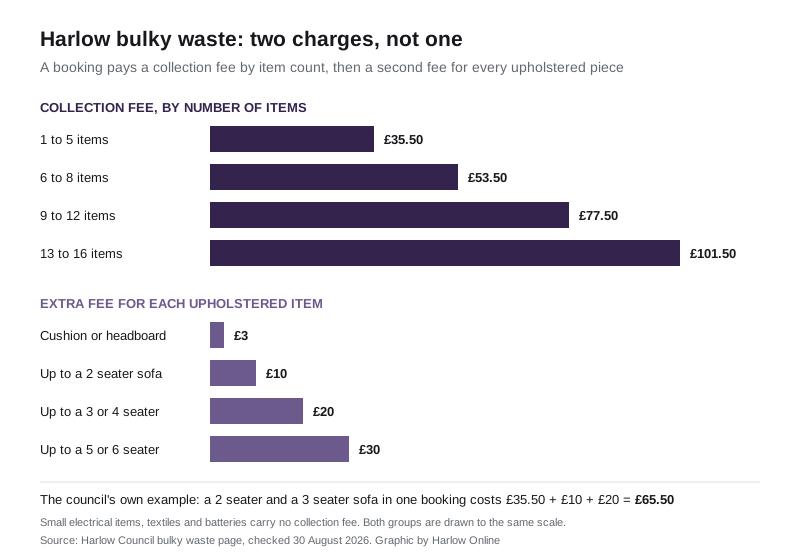
Harlow charges for bulky collections by the number of items, then adds a second charge for anything upholstered. The bulky waste page gives both ladders.
| Items in the booking | Collection fee |
|---|---|
| 1 to 5 | £35.50 |
| 6 to 8 | £53.50 |
| 9 to 12 | £77.50 |
| 13 to 16 | £101.50 |
On top of that, each piece of upholstered furniture carries its own fee:
- small upholstered item, such as a cushion or padded headboard: £3
- seating up to a 2 seater sofa: £10
- seating up to a 3 or 4 seater sofa: £20
- seating up to a 5 or 6 seater sofa: £30
The council’s own worked example is a 2 seater and a 3 seater sofa in one booking: £35.50 collection, plus £10, plus £20, so £65.50. It blames new Environment Agency rules on disposing of upholstered furniture, and warns that upholstered items must be put out separately from everything else on the day, and may be collected on a different date.
There is a genuinely free tier, and the council’s general waste page describes it misleadingly. That page tells you to use “our free bulky waste service” for electrical items. Only small electricals count. The bulky waste page is specific: there is no collection fee for small electrical items such as irons, kettles and toasters, or for textiles, however many you book. A fridge, a washing machine or a cooker is a chargeable item like any other.
Before paying, it is worth calling ECCO on 01279 444 244. The council supports the local charity, which collects reusable furniture, electricals and household goods for free and sells them through its shops.
Free collections most people do not know about
Five Harlow services cost nothing, and none of them are on the main bins page:
- Batteries. Put loose batteries in a labelled cardboard box or bag next to your black bin or purple sacks on rubbish week. The battery waste page says the container is taken too, so do not use anything you want back. Houses only, not flats or communal properties. Damaged, leaking and car batteries are refused.
- Textiles. Booked through the bulky service at no charge. Bag them, label the bag “textiles”. Clothes, paired shoes, coats, curtains, towels and bedding are accepted; duvets, pillows, cushions, blankets and sleeping bags are not.
- Clinical waste, free for residents who self-medicate at home. Apply by calling 01279 446655, and a doctor has to confirm the waste is clinical.
- Nappies and incontinence waste, collected every two weeks for households that regularly exceed their rubbish capacity because of it. Essex County Council also offers a £30 refund towards cloth nappies or laundering.
- Assisted collections, where the crew fetches the bins from where you keep them and puts them back. You need a reason: no able-bodied person in the household, a permanent disability, or short term help after an injury or operation.
Missed collections: two working days
Harlow gives a short window. Its bin collections page says reports can be made up to two working days after the scheduled collection, and only if the bin was in the right place on the right day by 7am.
If the crew leaves a hanger on your bin rather than emptying it, that is a refusal rather than a miss, and reporting it will not help. The council lists the reasons: wrong bin or bag, wrong items inside, wrong day, out after 7am, overfilled so the lid will not close, or too heavy to lift safely.
Damaged or stolen bins are replaced through order a new bin. If you are moving into a new build, the council says to contact the developer instead, because they arrange the first delivery.
Harlow Recycling Centre, Temple Bank
The tip is run by Essex County Council, not Harlow Council. Details are on the Love Essex listing.
- Address: Temple Bank, Harlow, CM20 2DY
- Open 1 March to 15 October: 9am to 5pm every day
- Open 16 October to end of February: 9am to 4pm every day
- Closed: Christmas Day, Boxing Day and New Year’s Day, and from 1pm on Christmas Eve and New Year’s Eve
You have to book a slot every time you drive in. Booking is free but there is no annual permit that gets you past it, and there are separate booking routes for cars and for vans, pick-ups and large trailers. Blue Badge holders, pedestrians and cyclists do not need to book. Staff can ask for proof that you live in the Essex County Council area, so take a council tax bill or driving licence.
Harlow sits on the county boundary, and that is reflected at the gate. Love Essex says residents from nearby parts of Hertfordshire may currently use the site under a reciprocal arrangement with Hertfordshire County Council. It does not work symmetrically: an Essex resident wanting to use a Hertfordshire tip has to apply for a free annual permit first.
DIY waste is accepted but capped per visit. Essex County Council’s DIY waste limits page sets the maximum for a single visit at three wheelbarrow loads (or one car boot) of soil, rubble or plasterboard, one wheelbarrow load of tiles, three large ceramic items such as basins or toilets, one window frame, one external door, three internal wooden doors, and one element of a fitted kitchen.
Gas canisters, light bulbs and vapes all have to go to Temple Bank rather than in any kerbside bin.
Related pages
- Harlow roadworks and travel, including closures that can hold a round up
- Harlow council tax bands, and what the £13 in every £100 that Harlow Council keeps pays for
- Parking in Harlow
- Harlow planning news
Sources
- Harlow Council, bins and recycling, bin collections, putting your bins out, what goes in each bin, order a new bin and assisted bin collections
- Harlow Council, green waste, bulky waste, battery waste, textile waste, clinical waste and nappies and incontinence waste
- Harlow Council, Christmas and new year information and From April you can recycle more at home
- Harlow Council self-service portal, bin collection lookup and bank holiday notice, checked 30 August 2026
- Essex County Council, Harlow Recycling Centre and DIY waste limits
Have your say