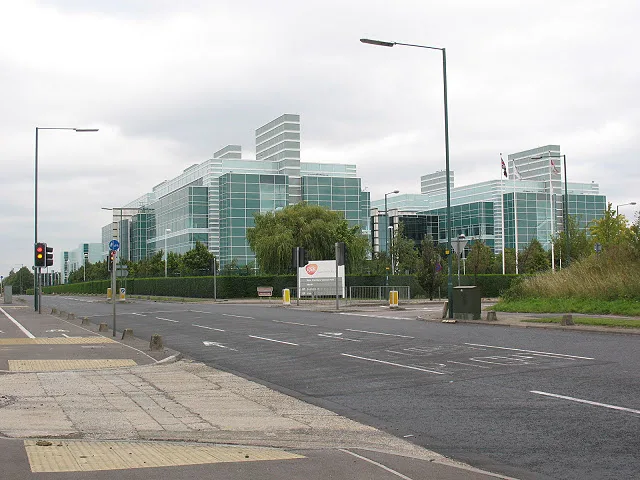

The approved £3.52bn plan for Harlow's health security campus brings Kier back for the top-security lab, demolishes the old main building and opens in 2038.
The national health security campus planned for Harlow now has an approved business case. It sets out who builds what, and when. The UK Health Security Agency (UKHSA) published a summary on Monday. It confirms that HM Treasury approved the plan in July.
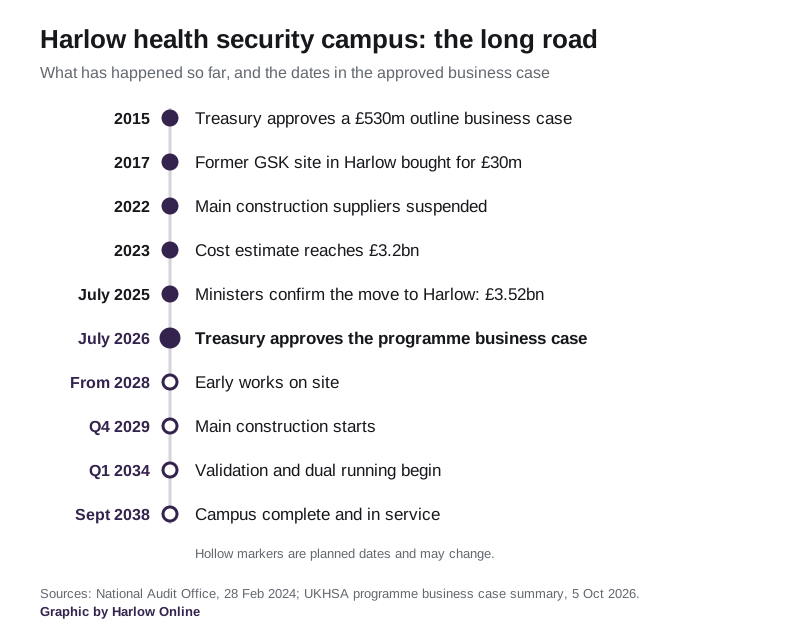
The headline dates for Harlow:
- early works on site from 2028
- main construction from October to December 2029 (quarter 4)
- validation and dual running from early 2034
- campus complete and in service by September 2038
The whole programme has a budget of £3.52 billion. (GOV.UK, UK Health Security Campus Programme: programme business case summary, 5 October 2026)
Kier is coming back for the top-security lab
The campus is split into two building projects. The first is the H50 High Containment Building, with laboratories for the most dangerous pathogens: Containment Level 3 and Level 4, the highest level. Scientists will work in air-fed suits in some of them. UKHSA says it will be the first suited CL4 facility for public health in the UK.
The business case approves reinstating a pre-construction services agreement with Kier for that building. Reinstating means Kier held the agreement before the programme stalled.
UKHSA explains why it did not start again. A new contest would have taken 12 to 18 months. In its words, “only three UK suppliers can deliver at this scale”. Going back to market risked losing the programme’s place in that queue, and the document says it would have meant a two-year delay.
The old main building will be demolished
The second project is the Main Site. It includes a new main building with laboratories and office space.
The approved plan includes a two-stage procurement for a main contractor to build it, with the existing main building on the site demolished to ground level. The site was GlaxoSmithKline’s. The Department of Health authorised its purchase for £30 million in 2017, for UKHSA’s predecessor, Public Health England. That is according to the National Audit Office. (NAO, 28 February 2024)
In July UKHSA told the construction industry what that contract was likely to cover. Its notice on the government’s tender service listed:
- a science and headquarters building for around 2,400 full-time staff
- Containment Level 2 and Level 3 laboratories
- offices, logistics, warehousing and support buildings
- arrivals, reception, security and an education and training centre
- an energy centre, parking and site-wide roads and utilities
It put the estimated value at £1 billion before VAT, with work running from January 2028 to September 2038. It is not yet a contract, and the notice says the scope and timetable may change. (Find a Tender, notice 2026/S 000-065492, published 10 July 2026)
Where the £3.52 billion goes
The business case breaks the budget down:
| Part | Amount |
|---|---|
| Capital costs (buildings, equipment) | £3,022 million (86%) |
| Revenue costs (moving people and services) | £503 million (14%) |
| of which, staff transition | £95 million |
| of which, building staff capacity before the move | £45 million |
| of which, running old and new sites together (net present cost) | £79 million |
Within those totals sits a risk allowance of £665 million gross. UKHSA says the biggest cost pressures come from the specialist H50 building and the main science building.
Seven professional services contracts will also be let to help run the programme.
How many jobs move to Harlow
UKHSA’s science currently sits mainly at Porton Down in Wiltshire and Colindale in north London, with its headquarters in central London. The plan is to move “as many as possible” of about 2,500 roles from those three sites to Harlow. Staff will start moving from the mid-2030s.
Harlow Council’s own figures, from when the move was confirmed in July 2025, were higher. It said the campus would bring 2,750 jobs and more than 1,600 construction jobs, and £28 million a year to the local economy during construction. (Harlow Council, 17 July 2025) The business case does not repeat those numbers.
It does describe Harlow plainly. The town is “currently characterised by below average employment levels and household income”, it says, and the campus should bring skilled jobs and “local talent” into its workforce.
Why it has taken so long
This is not a new plan. The Treasury approved a £530 million version in 2015. By 2023 the estimate had reached £3.2 billion. In 2022 UKHSA suspended its main construction suppliers after funding was moved elsewhere, and only minimal work has happened on site since. The National Audit Office said in 2024 that the earliest opening date had slipped to 2036. (NAO, 28 February 2024)
The new target is two years later than that: September 2038.
What it means for you
- Nothing changes on the ground yet. Early works are not due until 2028.
- Expect planning applications. The business case lists “local authorities remaining engaged to support planning permission applications” as something the programme depends on. Demolishing and replacing the main building will need consent. We will report them on our Harlow planning news page when they are lodged.
- Construction traffic will come later. A build this size, running from 2028 into the late 2030s, will mean lorries around the Pinnacles. Our roadworks and travel page carries closures as they are announced.
- Local firms and jobseekers can follow the contracts on the government’s Find a Tender service, where the main build will be advertised.
Sources
- UKHSA, UK Health Security Campus Programme: programme business case summary, published 5 October 2026
- Find a Tender, UK Health Security Campus, Harlow, preliminary market engagement notice, 10 July 2026
- National Audit Office, Costs multiply as uncertainty dogs UK health security campus, 28 February 2024
- Harlow Council, UK Health Security Agency: a landmark moment for the town’s future, 17 July 2025
Have your say